If you’re trying to buy in Newton, the townhouse versus single-family question can shape everything from your budget to your daily routine. In a market where prices are high, competition is still real, and options vary widely by village, the right choice is rarely about square footage alone. This guide will help you compare the numbers, the lifestyle tradeoffs, and the Newton-specific factors that matter most so you can make a confident decision. Let’s dive in.
Newton Market Snapshot
Newton remains a high-price market with steady competition. In Redfin’s March 2026 housing market snapshot, the citywide median sale price across all home types was $1.45 million, homes sold in 24 days, 31.4% sold above list price, and 19.1% had price drops.
That broad picture matters, but the townhouse versus single-family comparison gets clearer when you look at city sales data. According to Newton’s 2024 sales report, the city recorded 551 single-family sales with a median price of $1.75 million and 345 condo sales with a median price of $1.121 million.
In Newton, many townhouse-style homes are structured as condos or part of an association. That means condo data can be a useful stand-in for much of the attached-home market, even if it is not a perfect one-to-one match. The big takeaway is simple: attached homes often offer a lower entry point, but they do not automatically mean low-cost living.
Newton Housing Stock Matters
Newton still leans heavily toward detached homes. The city’s housing snapshot showed 17,184 single-family units and 5,235 condo units in 2020, or roughly 52% and 16% of all housing units.
Attached housing is still an important part of the local market, and it has grown over time. Condo units increased about 19.2% from 2010 to 2020, while the number of single-family homes was essentially flat. For you as a buyer, that means townhouse-style options are meaningful in Newton, but the market as a whole still centers on detached homes.
Compare Budget First
The first question for most buyers is cost. On paper, the median price gap is substantial: $1.75 million for single-family homes versus $1.121 million for condos in 2024, a difference of $629,000 according to Newton’s city sales data.
That gap can open doors for buyers who want Newton but need a lower purchase price. It can also free up room in your budget for reserves, updates, or a more central location. But purchase price is only part of the monthly picture.
Newton’s FY2026 residential tax rate was $9.73 per $1,000 of assessed value, and the city packet lists the average single-family tax bill at $16,314. In a market this expensive, carrying costs matter just as much as headline pricing.
Look at Total Monthly Cost
A townhouse may lower your upfront price, but it may also come with HOA or condo dues. The Consumer Financial Protection Bureau notes that HOA or condo fees are usually separate from your mortgage payment, so they need to be evaluated on top of principal, interest, taxes, and insurance.
The CFPB also emphasizes budgeting for maintenance and repairs when you buy a home. With a single-family property, those costs are usually more direct and less predictable. With a townhouse, some exterior expenses may be shared through dues, but your monthly obligation may be higher than expected once those fees are included.
A useful Newton-specific rule is to compare total carrying cost, not just list price. That means adding up:
- Principal and interest
- Property taxes
- Homeowners insurance
- HOA or condo dues, if applicable
- Expected maintenance and repair costs
Maintenance and Convenience
For many buyers, this is where the decision gets real. If you want less day-to-day responsibility, a townhouse can be appealing because some exterior work and common-area maintenance may be handled through the association.
Fannie Mae’s condo and townhome guidance explains that townhomes may share walls or be detached, and in condo or HOA communities, monthly fees often help cover exterior repairs, common areas, and shared services. That setup can reduce the amount of hands-on upkeep you manage yourself.
A single-family home usually offers more direct control. You decide when to repair the roof, how to handle landscaping, and what exterior changes to make, subject to local rules and permits. The tradeoff is that you are also responsible for the full cost and coordination of those decisions.
Ask Yourself What You Want to Manage
If you are busy, relocating, or simply tired of handling exterior upkeep, a townhouse can feel simpler. If you value having full control over the property and are comfortable planning for repairs over time, a single-family home may feel more natural.
This is less about which option is “better” and more about which kind of responsibility fits your life. In Newton, both paths can work well when the numbers and expectations are clear from the start.
Privacy and Outdoor Space
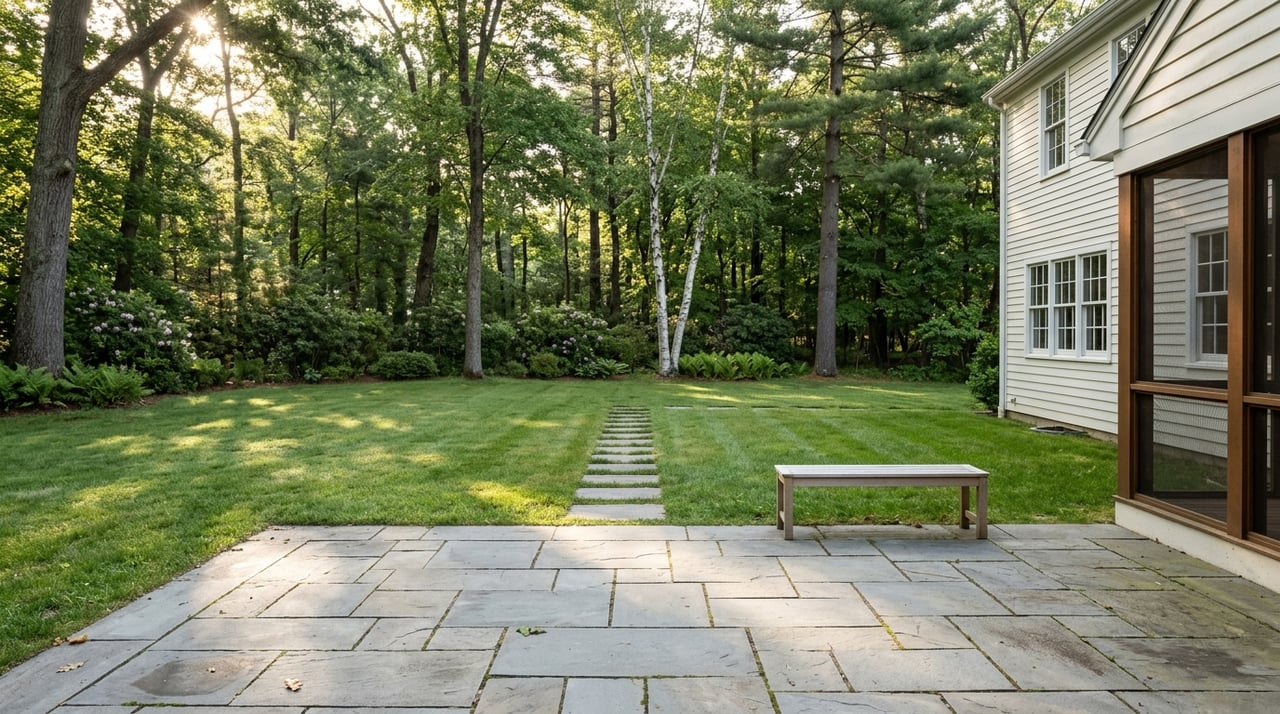
Privacy is often one of the biggest reasons buyers prefer a single-family home. Detached homes generally provide more physical separation, more independent outdoor space, and fewer shared elements.
That said, attached homes in Newton are not all the same. Some townhouse-style properties may include private yards, driveways, garages, or layouts that feel much more like a detached home than buyers expect.
This is why it helps to look beyond the label. “Townhouse” does not automatically mean small, crowded, or lacking outdoor space, just as “single-family” does not always guarantee a large lot or complete privacy. The property’s site plan, layout, and ownership structure matter just as much as the category.
Village Often Matters More
One of the biggest mistakes buyers make is assuming property type alone determines affordability. In Newton, village-level pricing can shift dramatically.
According to Newton’s 2024 sales data, single-family median prices ranged from about $1.0 million in West Newton/Newtonville to about $3.1 million in Chestnut Hill. That spread is a strong reminder that location can outweigh property type.
A townhouse in a premium Newton village may cost more than a detached home in another part of the city. So before you decide “townhouse or single-family,” it often makes sense to decide which Newton village fits your budget and lifestyle first.
Resale and Long-Term Flexibility
Both attached and detached homes can resell well in Newton. The local market has active demand across both segments, and Redfin’s Newton data still describes the city as very competitive, with a 99% sale-to-list ratio and homes moving in about 24 days.
Still, resale risk shows up differently depending on the property type. Single-family homes often appeal to the broadest pool of buyers because they combine the house, the land, and greater autonomy without association rules.
For a townhouse or condo-style property, the health of the association matters much more. Fannie Mae’s HOA guidance notes that HOA boards are responsible for maintaining common areas and setting rules, and projects with deferred maintenance or critical repairs can create financing issues.
Review These Items Before You Buy Attached
If you are considering a townhouse in Newton, review the association carefully. A strong location and attractive finishes are important, but they are not enough on their own.
Look closely at:
- Monthly dues
- Reserve levels
- Recent and planned repairs
- Rules that affect your use of the property
- Any signs of deferred maintenance
- Whether the project appears lender-friendly
This is one of the clearest ways to protect your resale flexibility later.
Which Option Fits You Best?
A townhouse may be the better fit if you want a lower purchase price, less exterior maintenance, and a more streamlined ownership experience. It can also make sense if your priority is getting into Newton while keeping more room in your budget.
A single-family home may be the stronger fit if privacy, control, and outdoor space matter most to you. It also tends to suit buyers who are comfortable with ongoing maintenance and want maximum autonomy over the property.
In Newton, the most practical framework is this:
- Start with your target monthly carrying cost
- Choose the village or area that best supports your priorities
- Compare specific properties, not just property categories
- If attached, review the HOA or condo documents carefully
- If detached, budget honestly for maintenance and taxes
When you look at the decision this way, the answer usually becomes much clearer.
If you want help comparing Newton villages, pressure-testing total monthly costs, or weighing a townhouse against a single-family home in real time, Kelly Morales brings a calm, analytical approach that can help you move forward with more clarity and less stress.
FAQs
What is the price difference between a townhouse and a single-family home in Newton?
- Based on Newton’s 2024 sales data, the median single-family sale price was $1.75 million and the median condo sale price was $1.121 million, a difference of $629,000.
Are townhouse HOA fees included in a Newton mortgage payment?
- No. The Consumer Financial Protection Bureau says HOA or condo dues are usually paid separately from your monthly mortgage payment.
Is a single-family home always better for privacy in Newton?
- Detached homes generally offer more separation and control, but privacy depends on the specific property, lot, and layout. Some townhouse-style homes may also include private outdoor space or features that feel more independent.
Should Newton buyers choose a village before choosing property type?
- Yes. Newton’s pricing varies significantly by village, so location often has a bigger impact on your budget than whether a home is attached or detached.
What should Newton buyers review before buying a townhouse?
- Review the HOA or condo association’s dues, reserve levels, maintenance history, rules, and any signs of deferred repairs, since those factors can affect both your monthly costs and future resale.